Novemeber 16, 2024
United States
Social Links:



https://smilesdecoded.com
5Pages . DAILY EDITION

Global Markets Enter New Risk Regime as Growth, Tech & Rates Collide

U.S. Corporate Loan-Stress Rises as Growth Moderates and Rates Hold

U.S. Sport in Transition: From Domestic Leagues to Global Platforms

Government Shutdown Ends After 43 Days
Federal workers return as pay resumes and agencies reopen.

Treasury Prepares Price-Cut Measures for Coffee & Bananas
Household cost pressure drives policy action on food imports.

Immigration Crackdown Underway in Charlotte, NC
Federal agents make arrests as part of “Operation Southern Spear”.
Treasury Signals Tariff Relief to Tackle U.S. Household Costs

With inflation still a major vote-issue in U.S. politics, the Treasury is signalling a tactical shift toward import-price relief. The measures may include tariff reductions on certain categories and streamlined customs. While prices may ease later in 2026, the announcement itself is meant to improve consumer sentiment and political optics.
U.S. Government Shutdown Ends — What It Means for Federal Services and Workers
After a 43-day standoff, federal operations resume and back-pay begins.
The federal government shutdown, triggered by a budget impasse and lasting 43 days, has finally concluded as the House (222–209 vote) and Senate advanced the funding bill, and President Trump signed it into law. Federal offices that had been closed or operating under limited capacity are now reopening, including key cultural institutions such as the Smithsonian museums, and employees across multiple agencies are set to receive back-pay in
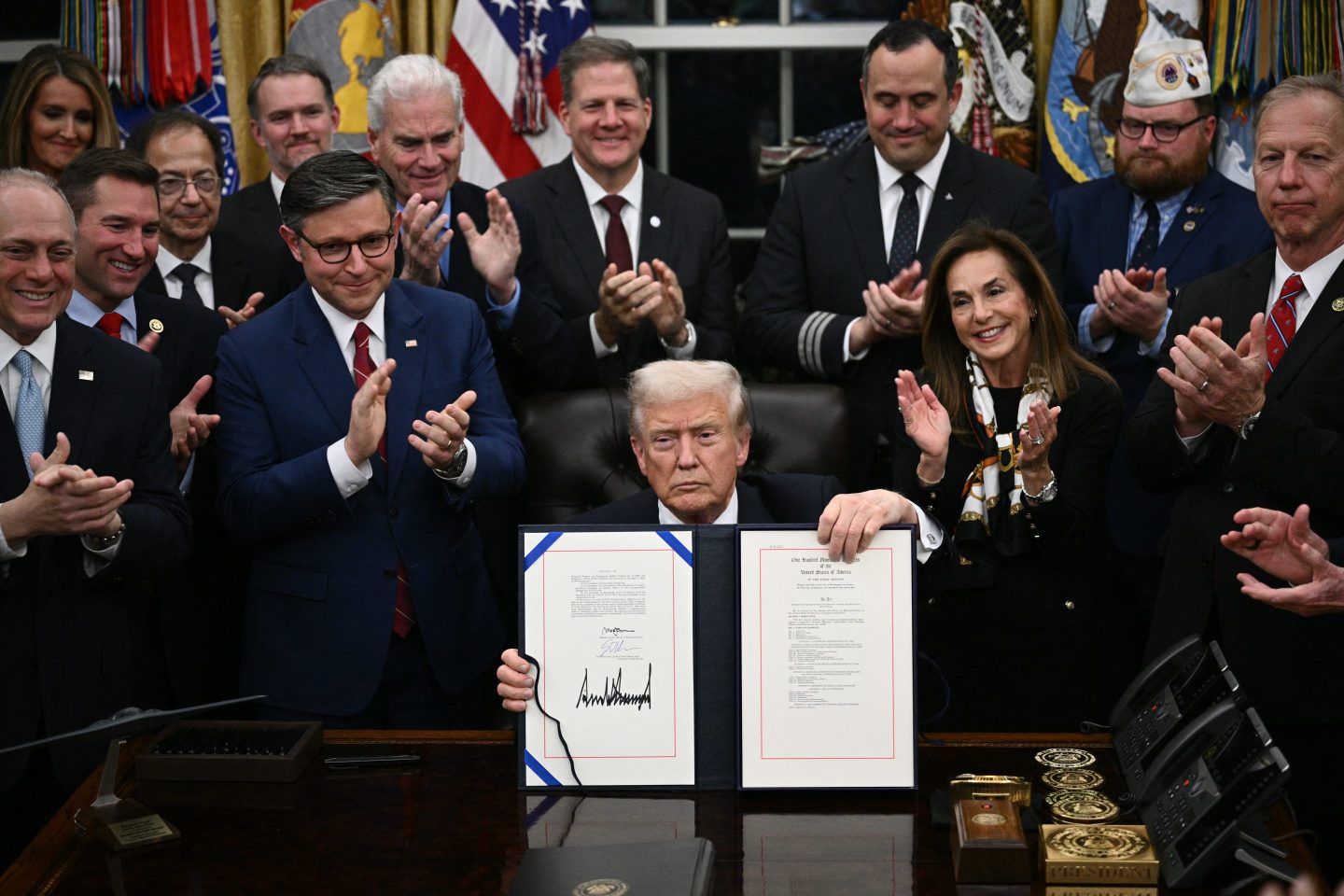
staggered tranches by November 19. However, the shutdown’s effects may linger: delayed data releases (job numbers, economic indicators), backlog in services (food aid, regulatory approvals) and increased strain on federal-employee morale. Many analysts warn that although the immediate crisis is resolved, public trust and operational readiness will take longer to rebuild.
Immigration Enforcement Expands: Charlotte Becomes Focal Point for “Operation Southern Spear”
Federal immigration actions in U.S. cities raise questions about scale, impact and civil rights.
The administration’s latest immigration enforcement push has zeroed in on Charlotte, North Carolina, where multiple arrests were made this weekend after federal agents were dispatched. The mission, labelled “Operation Southern Spear”, is being described by the United States Southern Command and the Department of Homeland Security as targeting “narco-terrorists” and undocumented migrants who pose public-safety risks. Defense Secretary Pete Hegseth and senior DHS officials emphasised the operation’s regional scale.
For U.S. cities like Charlotte, the sweep raises both support and concern: law-enforcement agencies welcome federal assistance; immigrant-rights groups and local officials warn of overreach, racial profiling and resource diversion. The timing—immediately after the prolonged shutdown and amidst other domestic cost-of-living pressures—adds complexity. Businesses reliant on migrant labor may face disruption, and communities may see heightened tension. The outcome may define the administration’s domestic law-enforcement legacy and shape immigration policy ahead of 2026.
Page 1 – November 16, 2025
US News
smilesdecoded.com

Donald Trump Weighs Saudi F-35 Deal Amid China Concerns
U.S. considers stealth-jet sale to Saudi Arabia, with China intelligence worries in play.

Global Equity Risk-Off as Markets React to Chinese Slowdown
Investors pull back globally amid weak China data and U.S. tech wobble.

U.S. Tariff Pressures Expand – Half of Imports Now Under Tariffs
U.S. import tariff coverage approaches 50%, adding trade-cycle headwinds.
Supply-Chain Reallocation Gains Pace as Firms Hedge Geopolitical Risk
While cost efficiency drove global sourcing for decades, recent shocks — pandemic, trade war, logistics stress — are forcing firms to trade off cost for resilience. Many are shifting manufacturing to Southeast Asia, India or Mexico, but the transition brings higher complexity, lower economies of scale and time-lagged benefits. For the U.S., the trend may reduce dependency on China but also raises consumer-cost risk in the near term.
Global Markets Enter New Risk Regime as Growth, Tech & Rates Collide
China’s slowdown, U.S. tech stress and bond yields converge to reshape investor sentiment.
Investors are increasingly shifting away from “growth at all cost” bets as three major forces converge: decelerating Chinese investment, higher U.S. Treasury yields (limiting the path for borrowing), and a re-rating of major U.S. technology firms. The MSCI All-Country index is showing increasing volatility, and emerging-market assets are under pressure. Regionally, Europe and Asia led declines, with commodity exporters and
emerging bonds feeling the pain. Analysts argue the world may be entering a “higher for longer” rate era, where risk assets must demonstrate clearer fundamentals rather than momentum alone. For U.S. audiences, the implication is that global headwinds may affect export-driven companies, supply-chains and inflation dynamics indirectly.
The Era of Fragmented Globalisation: Trade, Tech & Power Shifts
From tariffs to chips to alliances, the economic order is being rewired.
The period of near-universal globalisation — characterised by deep value-chains crossing borders, liberal trade frameworks, and homogeneous standards — is giving way to a more segmented and strategic model. Countries are increasingly viewing trade, technology and supply-chains through the lens of national-security and strategic autonomy, not just cost-minimisation. For example, export-controls on semiconductors, rising tariffs on critical goods and regional trade blocs show this pivot in action.
For business and investors, the takeaway is clear: operating models built for integration and scale may falter. Instead, flexibility, adaptability and regional diversification become key. U.S. firms that rely heavily on one geography or one supplier may face hidden risks. The impact may show up in higher costs, slower growth and increased capital risk. The future may favour those who recognise that the “global market” may now be multiple interconnected but distinct market blocs.
Page 2 – November 16, 2025
World News
smilesdecoded.com
International Monetary Fund Warns of Rising U.S. Economic Strains
IMF flags weakening demand, job growth slowdown & lingering shutdown impact.
U.S. Traders Bet Against December Rate Cut as Fed Hawks Press Case
Market expectations shift as Fed signals stay-the-course.
Trump’s Bond Holdings Rise to $82 Million, Disclosures Show
Recent filings show Trump invested in bonds across sectors aligned with his policy moves.
Major Value-Stock Rotation Underway as Tech Stumbles
With the growth-stock trade under pressure and macro headwinds rising (rates, global growth, geopolitics), many portfolio managers are pivoting toward value. Companies with strong cash flows, long-term resilience and lower debt loads are gaining favour. Some funds are trimming high-beta names and increasing exposure to dividend-paying, stable-business firms. The trend may favour the U.S. mid-cap and small-cap value segments in coming months.
U.S. Corporate Loan-Stress Rises as Growth Moderates and Rates Hold
Firms face a tougher environment as economic momentum slows but borrowing costs remain elevated.
The U.S. economy is showing early signs of a slowdown: job growth is decelerating, consumer sentiment is softening and inflation remains above target. At the same time, borrowing costs remain elevated because the Fed has signalled no imminent rate cuts. The combination puts pressure on corporate cash-flows, especially for businesses that expanded during the low-rate era. Credit-
market analysts note widening spreads and increasing defaults among shadow-banks and leveraged firms. The up-shot: while headline indicators may remain resilient, the underlying ledger for many companies is weakening, which could have knock-on effects for corporate investment, employment and growth.
U.S. Growth Moderates, But Corporate Risk Quietly Builds
Growth may still be positive—but stress is creeping beneath the surface in business and credit markets.
The narrative of the past few years — of resilient consumer spending, strong job gains and low borrowing costs — is now shifting. The structural backdrop is more complex. Rate cuts are unlikely in the near term. Growth is moderating. Corporate debt levels, though not at crisis levels, are elevated relative to earnings. The mismatch between high rates and slowing growth is creating a fine-print risk that many investors and business leaders may be under-estimating.
For companies, the implications are: slower pricing power, tighter margins, higher refinancing risk, and less cushion from economic shocks. For investors: the “easy wins” of the past decade may be over, and returns will increasingly depend on durability, balance-sheet strength and strategic agility. The U.S. is not headed for collapse, but the runway ahead is rougher than many expect.
Page 3 – November 16, 2025
Business & Economy News
smilesdecoded.com
Charlotte Hornets’ LaMelo Ball Upgrade: Return Tonight vs Thunder
Hornets get their star guard back at crucial juncture of the season.

NBCUniversal to Relaunch Sports Network on Nov 17
Major U.S. sports-media shift as new channel set to debut.
U.S. College Sports Face Rising Budget Pressure Amid NIL & Media Costs
Universities reconsider programmes as athlete compensation and rights deals escalate.
NFL & NBA Streaming Deals Drive U.S. Sports Rights Inflation
Platforms pay more, leagues gain control — consumers face higher cost.
The shift from cable to streaming means major U.S. leagues are negotiating multi-billion-dollar deals with digital platforms. This raises costs for viewers, but also provides leagues more control and direct monetisation. The long-term question: will fans tolerate higher subscription prices and fragmentation?
U.S. Sport in Transition: From Domestic Leagues to Global Platforms
Franchises, rights and fans are all going global.
The U.S. sports-economy is undergoing a significant transformation. Beyond wins and losses, teams are now global brands: hosting games overseas, launching digital content worldwide and exploring new sponsorship opportunities. Media rights are shifting from traditional linear TV to streaming platforms, and fans are more international. At the same time, the cost of
athlete compensation, infrastructure and expansion is escalating. Franchises must become not only athletic organisations but also scalable global businesses. For U.S. fans and investors, the sport business is becoming as complex as any tech start-up.
The Business Playbook of U.S. Sports: Scaling Globally While Managing Cost and Competition
Sports franchises are no longer just teams—they’re global media and entertainment companies.
Today’s leading U.S. teams aren’t just playing games—they’re deploying global strategies. From NBA teams playing exhibition games in Berlin and Tokyo, to MLB brands launching content in Latin America, U.S. franchises are chasing growth beyond the domestic market. Streaming deals, fan-engagement apps and cross-border sponsorships are key. But this growth comes with baggage: investor scrutiny, athlete pay inflation, regulatory risks and brand dilution. Franchises must invest in digital infrastructure,
data analytics and global marketing to monetise effectively. For the U.S. market, this evolution means higher ticket and merchandise prices, bundled streaming subscriptions, more international games and more visible athlete branding. But it also means that local loyal fans may feel sidelined if priorities shift abroad. The winners will be franchises that master both the local fanbase and the global stage. As the U.S. sports business pivots, fans, sponsors and platforms all stand to benefit—or lose, depending on execution.
Page 4 – November 16, 2025
Sports Highlights News
smilesdecoded.com
Beyond “America First”: U.S. Must Reframe Global Economic Strategy
America’s role in trade & tech is shifting — nuance matters.

Supply-Chain Resilience Trumps Lowest Cost in 2026 Strategy
Firms accept higher cost for reliability and geopolitical buffer.
AI Hype Meets Reality: Valuation Bubble Risk Looms
The AI market may be over-priced and under-delivering.
Brand Strategy 2026: Value Over Visibility in a Fragmenting World
Marketing spend is shifting from reach to relevance.
For decades the mantra was “exposure”—get your brand in front of as many people as possible. But in a world of streaming, ad-skipping and micro-communities, the strategy is shifting. Brands targeting U.S. audiences are now investing in authenticity, experience and loyalty—not just impressions. That means fewer big-budget splash ads and more targeted, value-driven campaigns.
Strategic Reboot: How U.S. Firms Must Navigate the Post-Globalisation Era
From trade to tech to talent, everything needs rethinking.
The global business model that served the past two decades—lean, globalised, cost-driven—is no longer sufficient. Geopolitical tensions, climate risk, supply-chain shocks and rising wages in emerging markets are forcing companies to reassess. For U.S. firms, this means taking a long-term view of resilience rather than just efficiency. Strategic supply-chain hubs may return closer to home,
manufacturing may diversify, and digital platforms may blur the line between product and service. Boards and executives must transition from “grow fast” to “grow smart”. The winners will likely be those that invest in adaptability, regional expertise and strategic partnerships—not just scale.
The Business Imperative: Adapt or Fall Behind in the Next Economic Wave
Firms that stick to old playbooks risk being left behind in a rapidly changing world.
The era of mega-scale growth powered by cheap capital and globalisation is giving way to one defined by agility, resilience and strategic focus. For U.S. firms, this means diversifying revenue streams, rethinking supply-chain geography, investing in digital capabilities and preparing for regulatory/geopolitical disruptions. The old metrics—just revenue and margin—are no longer enough. Firms now must also factor in risk-adjusted returns, environmental/ social/governance (ESG) resilience and strategic flexibility.
The implication for the U.S. audience: your next job, your next investment, your next career move will be within companies that master change—not just ones that scaled fast. Leadership, culture and strategy will matter more than ever. For professional readers: assess whether your company has the adaptability muscle. For investors: favour firms with diversified operations, global scale but regional flexibility, and clean balance-sheets.
Page 5 – November 16, 2025
Editor’s Pick News
smilesdecoded.com

SMEG SMF03 Stand Mixer – 5 Qt Tilt-Head Mixer with Stainless Steel Bowl, 10 Speeds, Retro 50s Vintage Style – Red
LIMITED TIME DEAL 400$

Emeril Lagasse Dual Zone 360 Air Fryer Oven Combo with French Door, 25 QT Extra Large, Cook Two Foods in Different Ways, Up to 60% Faster from Frozen to Finish
LIMITED TIME DEAL 250$

Self Cleaning Litter Box, Automatic Cat Litter Box with APP Control, Odor-Free Waste Disposal Includes Trash Bags, Large Waste Bin, Open-Top, for Multiple Cats
LIMITED TIME DEAL 200$

HTC Vive Focus Vision Wired Bundle — XR Headset with DisplayPort PC VR Streaming Kit
LIMITED TIME DEAL 1,169$

Traveler's Choice Pagosa Indestructible Hardshell Expandable Spinner Luggage, Baby Blue, 3-Piece Set (22/26/30)
LIMITED TIME DEAL 250$

Nilight Catalytic Converter Set for Chevy Traverse 2009-2017 / GMC Acadia 2007-2017 / Saturn Outlook 2007-2010 / Buick Enclave 2008 2009 2010 2011 2012 2013 2014 2015 2016 2017 (EPA Standard)
LIMITED TIME DEAL 227$
Page 6 – November 16, 2025
Deals and Sponsorship
smilesdecoded.com
SmilesDecoded
Decoding Miles, Smiles & Stories.